8 Best PHP Website Examples for Inspiration
In This Article
- The PHP website examples at a glance
- 1. Wikipedia
- 2. WordPress
- 3. PHP
- 4. 101 Cookbooks
- 5. RoseHosting
- 6. Kudoboard
- 7. Stony Brook Medicine
- 8. Times Tables
- How to find more PHP websites with Stackcrawler
- Frequently asked questions
- Does a PHP website need a .php URL?
- Are WordPress websites PHP websites?
- Can a screenshot prove that a website uses PHP?
- Which example should I start with?
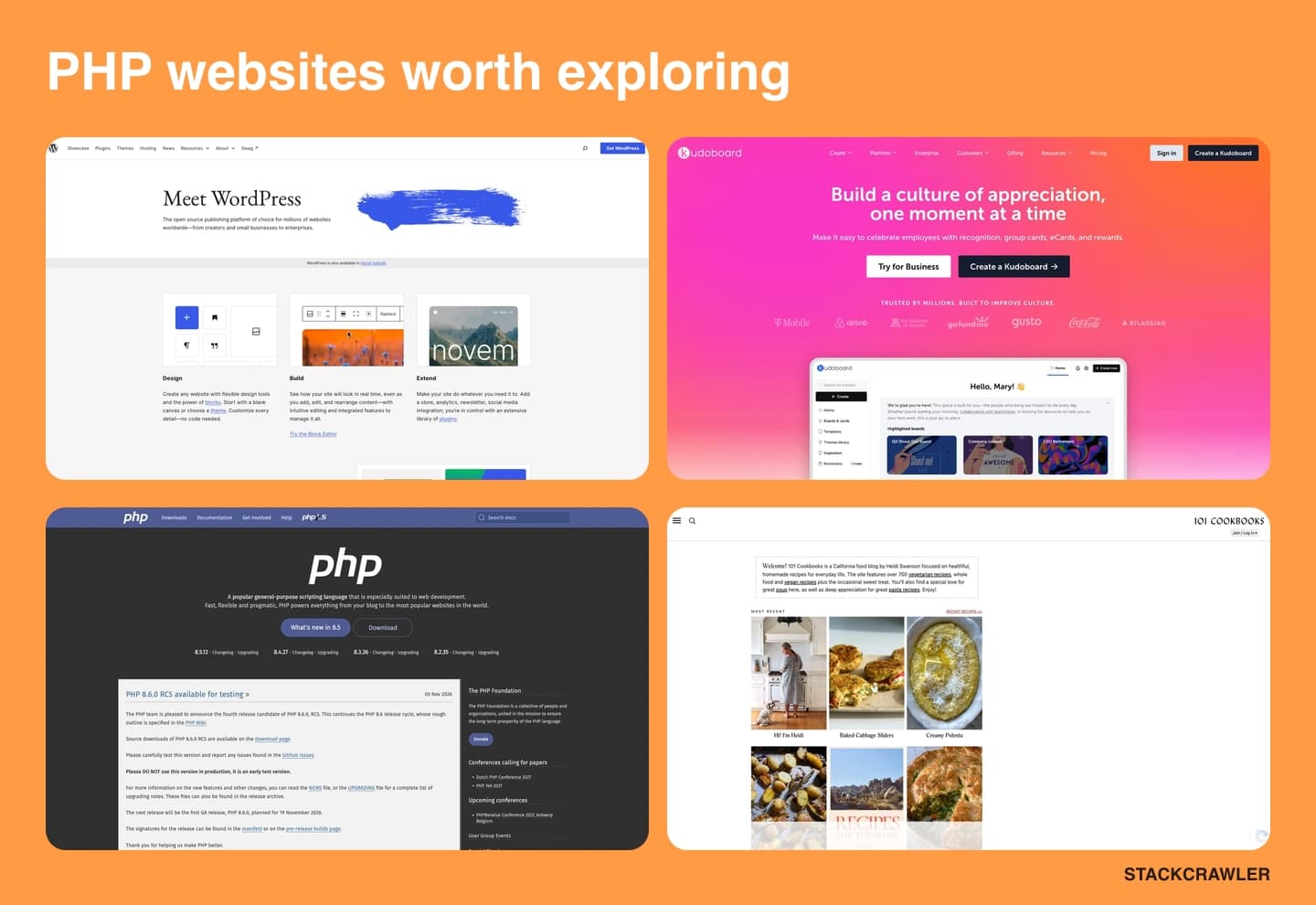
Looking for PHP website inspiration? These eight examples show how PHP appears in very different kinds of public websites, from a collaborative encyclopedia and developer documentation to recipe publishing and online learning.
Each includes a fresh screenshot and an idea you can apply to your own project.
We found the candidates through Stackcrawler’s PHP technology index and selected this collection for its range of uses and useful design patterns.
The PHP website examples at a glance
| Website | Useful reference for |
|---|---|
| Wikipedia | Collaborative publishing |
| WordPress.org | Open-source software |
| PHP.net | Developer documentation |
| 101 Cookbooks | Recipe publishing |
| RoseHosting | Hosting and service marketing |
| Kudoboard | Software marketing |
| Stony Brook Medicine | Institutional information |
| Timestables.co.uk | Interactive learning |
1. Wikipedia
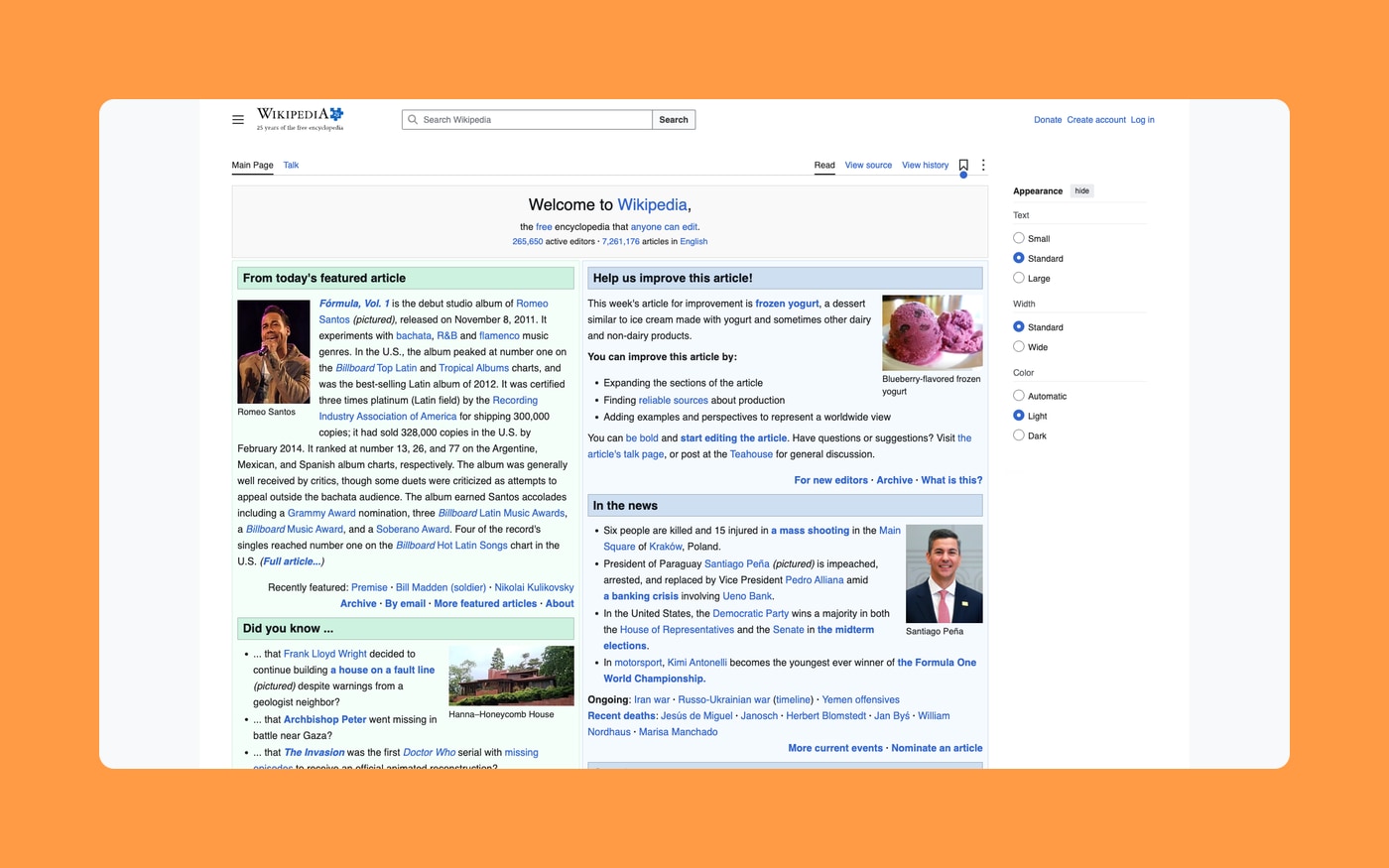
Useful for: Collaborative publishing.
Wikipedia is a useful PHP website example because it makes a huge body of collaboratively maintained information approachable. Its English main page gives readers several starting points, while individual articles use headings, references, and related links to support deeper research.
Idea to borrow: Organize dense information around familiar reading patterns. Search, a clear heading hierarchy, and links between related topics help readers move from a broad question to a specific answer.
PHP evidence: Wikipedia uses MediaWiki, whose main server-side language is PHP. See the MediaWiki language documentation. Stackcrawler lists the Wikipedia domain under PHP; the screenshot shows the English edition.
2. WordPress
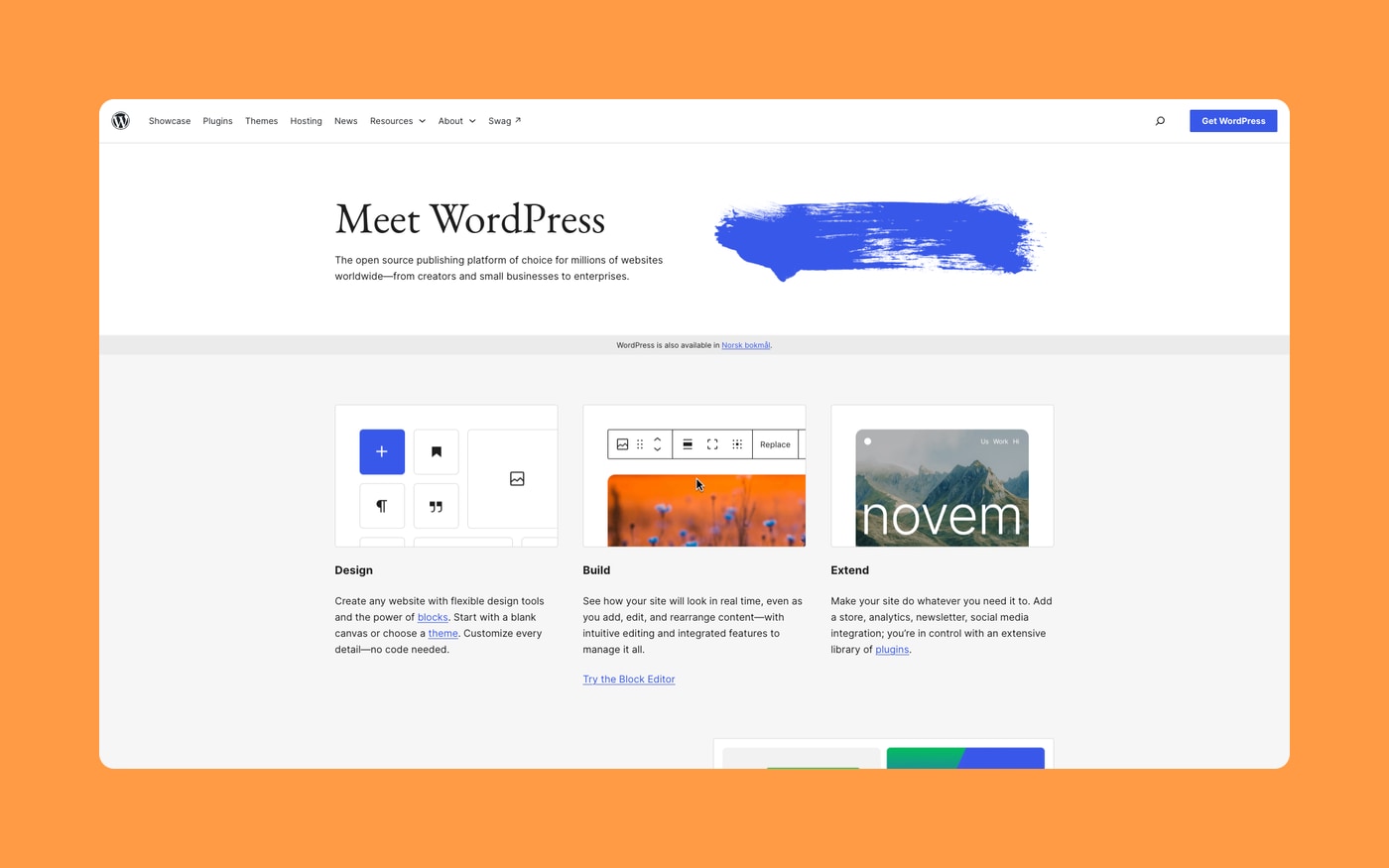
Useful for: Open-source software.
WordPress.org brings together a product introduction, downloads, themes, plugins, documentation, and community resources. It is a good reference for a website that must serve newcomers and experienced users from the same navigation.
Idea to borrow: Give new visitors a short explanation and a clear next action, then provide separate routes to the detailed resources that returning users need.
PHP evidence: Stackcrawler identifies WordPress and PHP on WordPress.org. PHP is also part of the platform’s official hosting requirements.
3. PHP
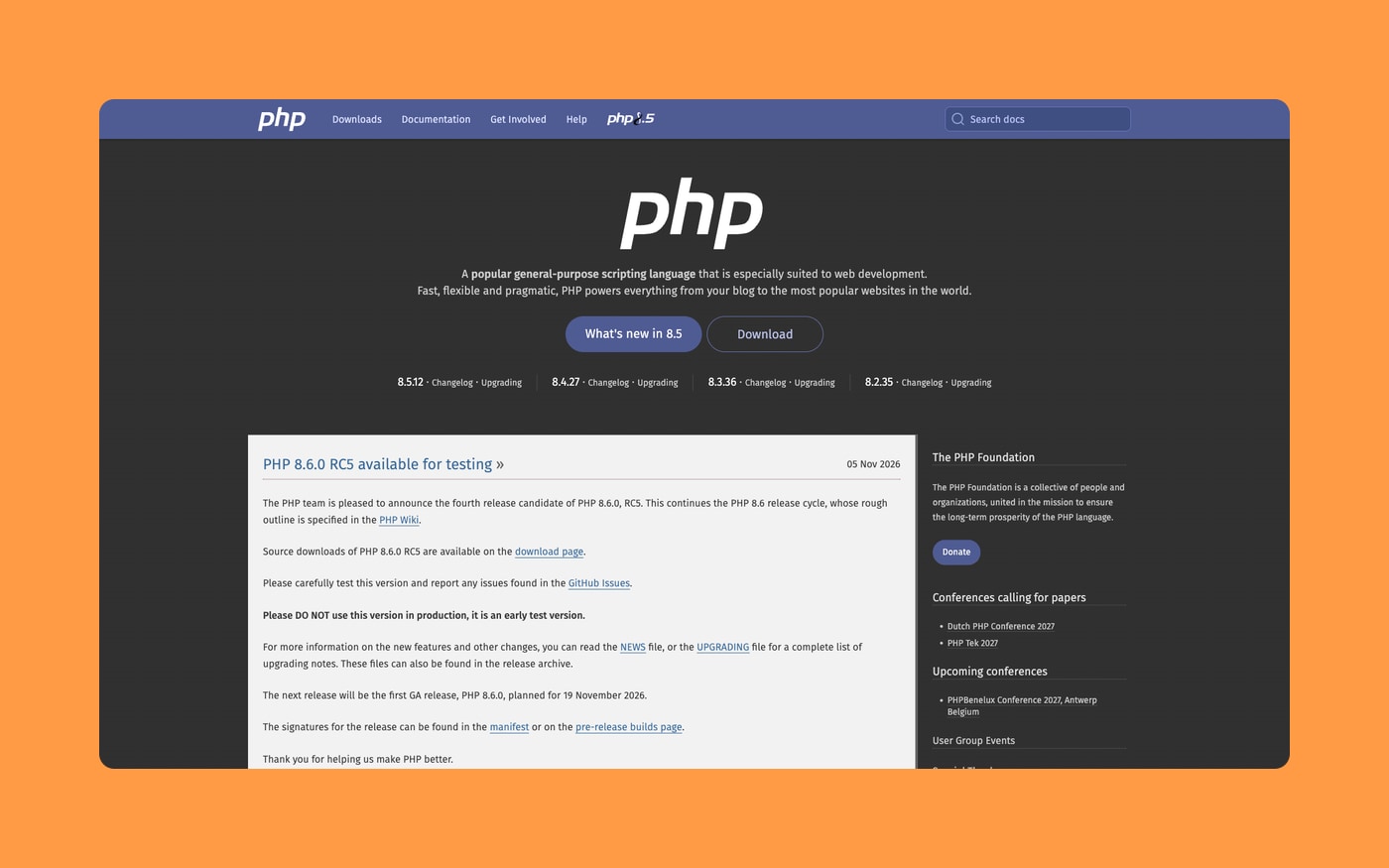
Useful for: Developer documentation.
The PHP project’s own website combines language information, downloads, release announcements, and reference documentation. It earns a place in this list for its direct approach to helping developers find an answer or choose the next step.
Idea to borrow: For a technical audience, make documentation easy to reach and keep release information distinct from introductory material. Useful navigation matters more than decorative effects.
PHP evidence: Stackcrawler indexes PHP.net as PHP. The site’s official source repository provides first-party evidence of its PHP implementation.
4. 101 Cookbooks
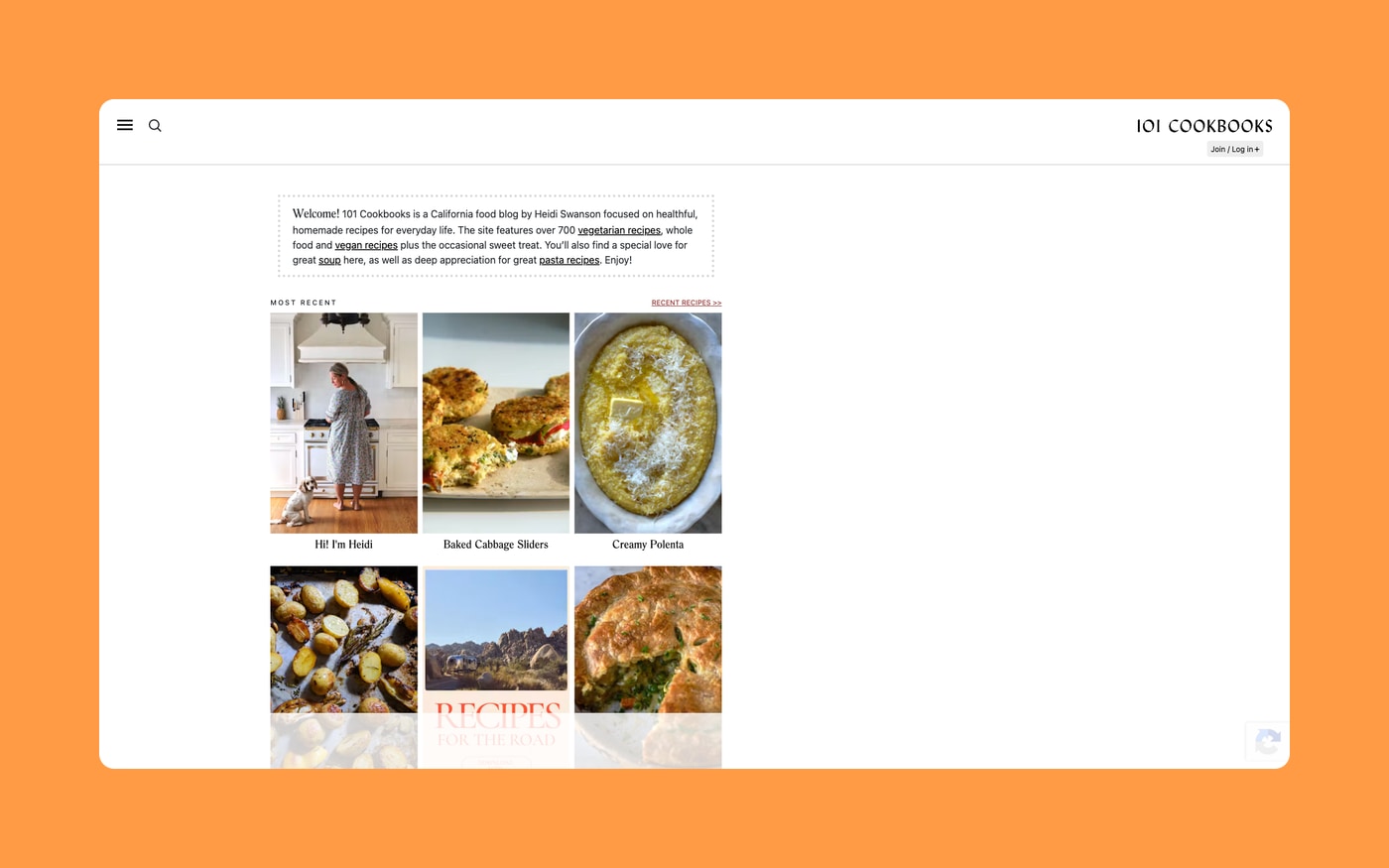
Useful for: Recipe publishing.
101 Cookbooks is a recipe website by Heidi Swanson, with an emphasis on vegetarian cooking and whole-food ingredients. It is a practical example for publishers whose visitors browse visually but return for specific, useful content.
Idea to borrow: Make photography support discovery, then give recipes descriptive titles and useful categories. A content library becomes more valuable when older posts remain easy to find.
PHP evidence: Stackcrawler lists PHP and WordPress for this domain. WordPress is a PHP-based publishing platform; this does not imply that every connected service uses PHP.
5. RoseHosting

Useful for: Hosting and service marketing.
RoseHosting’s website presents managed hosting services to visitors comparing technical options. It belongs in this list as a service-marketing example, with a different job from a magazine or an online shop: explain the offer and guide a considered decision.
Idea to borrow: Put the service proposition and the next step within easy reach. When offers contain technical detail, use a consistent structure so readers can compare them without rereading the page.
PHP evidence: Stackcrawler lists PHP and WordPress-related technologies for the public website. This example concerns the marketing site, not an independently verified claim about the customer control panel or hosting infrastructure.
6. Kudoboard
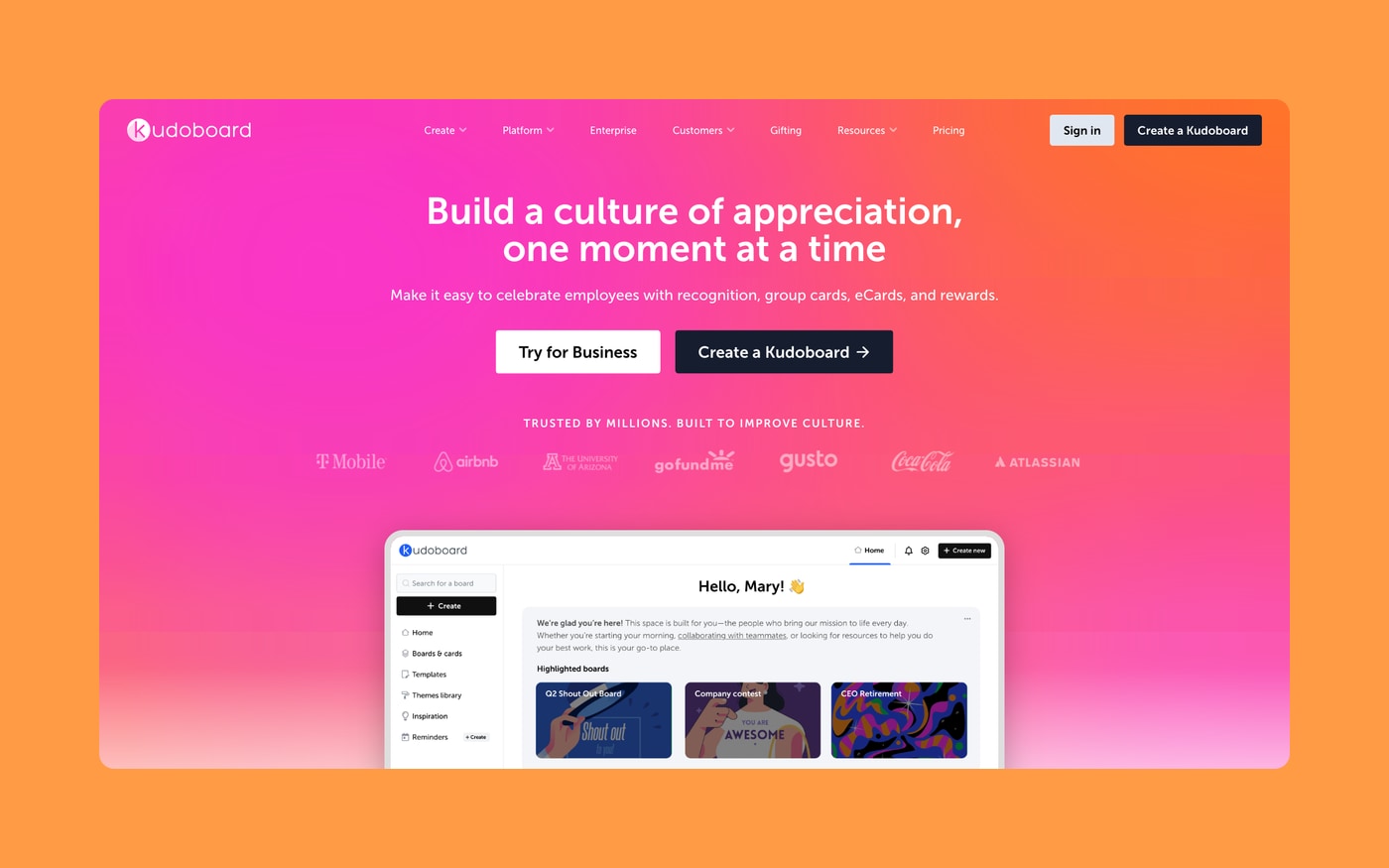
Useful for: Software marketing.
Kudoboard promotes group ecards and employee recognition. Its public website is a useful example of explaining a digital product through recognizable occasions and use cases, rather than expecting visitors to infer its purpose from a feature list.
Idea to borrow: Show who a product is for and when they would use it. Concrete scenarios can make an unfamiliar service easier to understand before visitors reach pricing or registration.
PHP evidence: Stackcrawler identifies PHP and WordPress on the public marketing website. That evidence does not establish the technology used by every part of the Kudoboard application.
7. Stony Brook Medicine
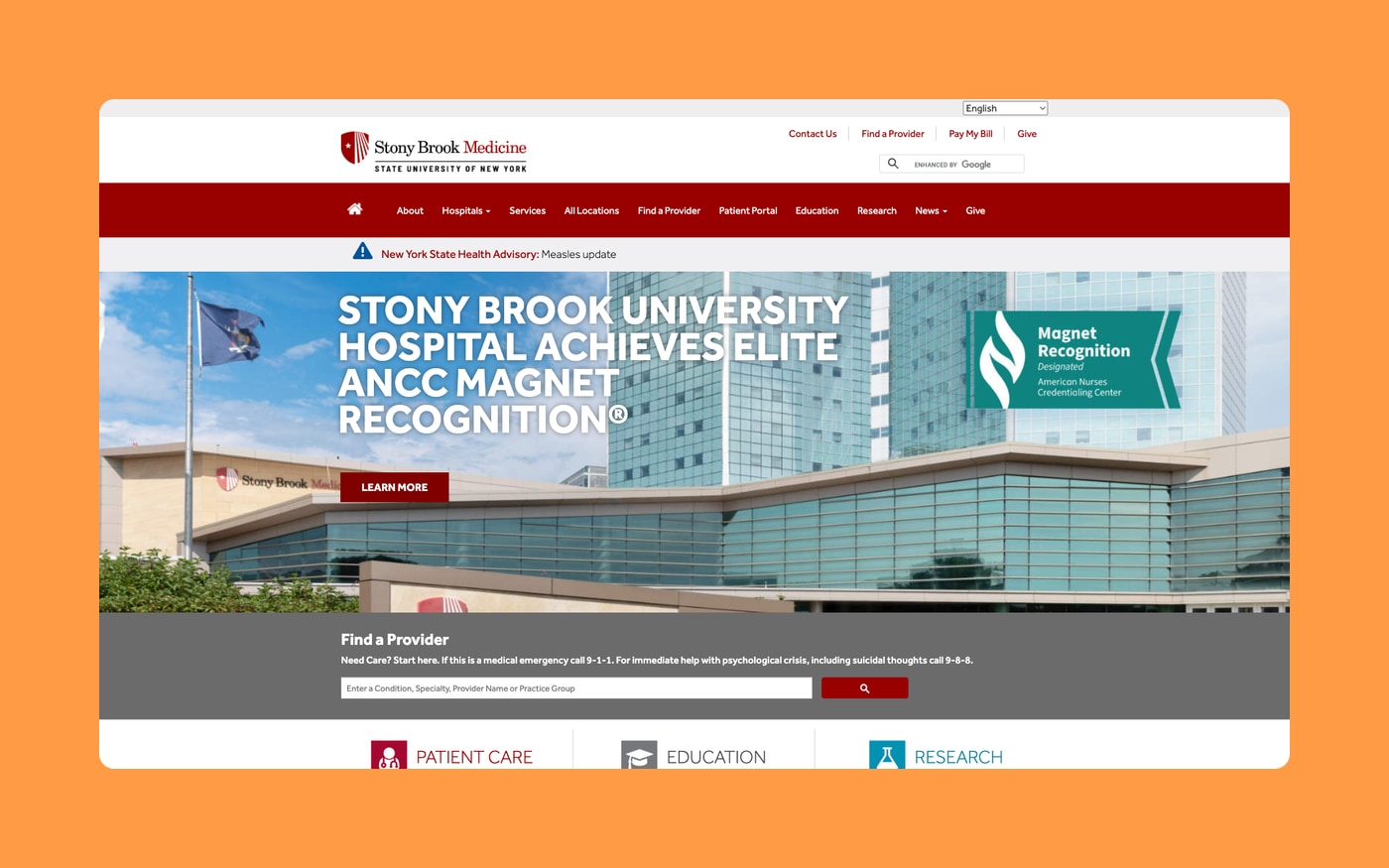
Useful for: Institutional information.
Stony Brook Medicine shows how an institutional website can serve several audiences, including patients, students, and researchers. It is a useful example to study when a site has many departments and visitors arrive with very different tasks.
Idea to borrow: Prioritize routes to common tasks and use descriptive navigation labels. Large organizations benefit from a consistent structure that helps readers recognize where they are.
PHP evidence: Stackcrawler indexes this domain under PHP. That is a detection signal for the public website, not a full audit of the institution’s systems.
8. Times Tables
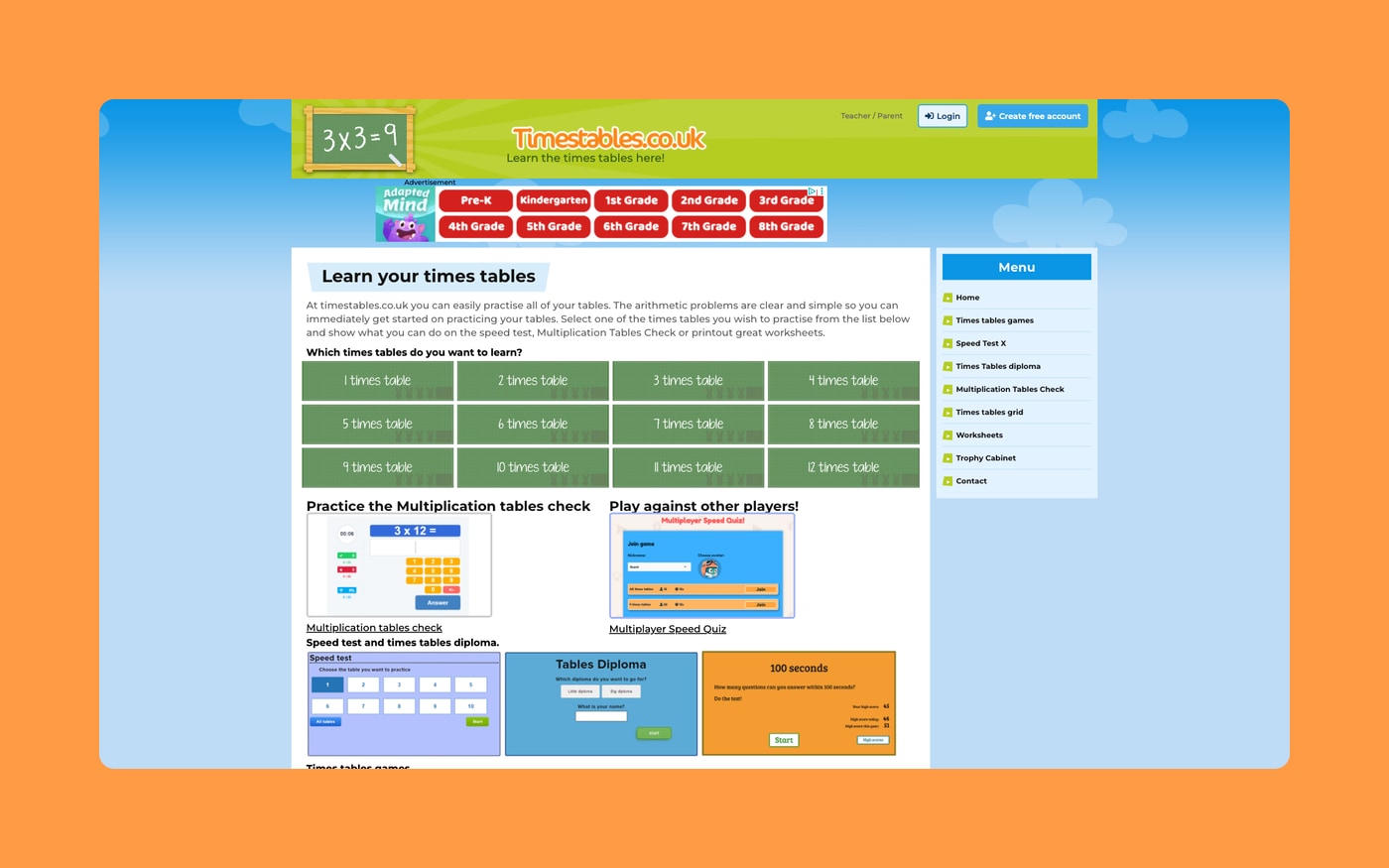
Useful for: Interactive learning.
Timestables.co.uk offers multiplication practice, games, and worksheets. It expands the list beyond business websites and publishing, showing a task-focused learning experience built around a narrow subject.
Idea to borrow: Break a learning goal into small, visible activities. Clear labels and direct routes to practice help visitors spend more time on the exercise they came to complete.
PHP evidence: Stackcrawler indexes this domain under PHP. The detected server-side language does not by itself explain how each game or interactive feature is implemented.
How to find more PHP websites with Stackcrawler
Open Stackcrawler Website Discovery, choose PHP in the technology filter, and narrow the results by language or the type of website you want to study. Open the public pages before adding them to a shortlist: a technology match is a starting point, while the current page shows whether the example is relevant to your project.
Compare sites with the same main task.
For a publication, look at categories, search, and article structure.
For a software business, study product explanations and calls to action.
For an institutional site, focus on how visitors reach common services. Recheck the technology evidence when it matters to a technical decision.
Frequently asked questions
Does a PHP website need a .php URL?
No. A PHP application can use readable URLs without exposing a file extension. The official PHP documentation also explains that server configuration can hide PHP use, so the visible URL alone is not reliable proof of the language behind a website.
Are WordPress websites PHP websites?
WordPress requires PHP on the server, which makes WordPress sites relevant examples of PHP-based publishing. A WordPress website can still use JavaScript in the browser and connect to services built with other technologies. See WordPress’s official requirements.
Can a screenshot prove that a website uses PHP?
No. A screenshot shows the public design at a particular moment. Technology evidence comes from detectable signals, platform documentation, or source code. That is why this article keeps the design observations and the PHP evidence separate for each example.
Which example should I start with?
Start with the website closest to your own use case: 101 Cookbooks for a browsable editorial library, WordPress.org for a resource-rich product website, Kudoboard for software marketing, and Timestables.co.uk for focused learning activities. Study the path from the homepage to a useful action, then adapt the pattern to your own audience.
Christoffer Pettersen
Founder, Web developerPettersen is the founder of Stackcrawler, a platform that helps analyze tech stacks. He is passionate about new trends and technologies in the software industry.